Build a Cleaner Future: Discover Solar Installer Jobs Across the USA
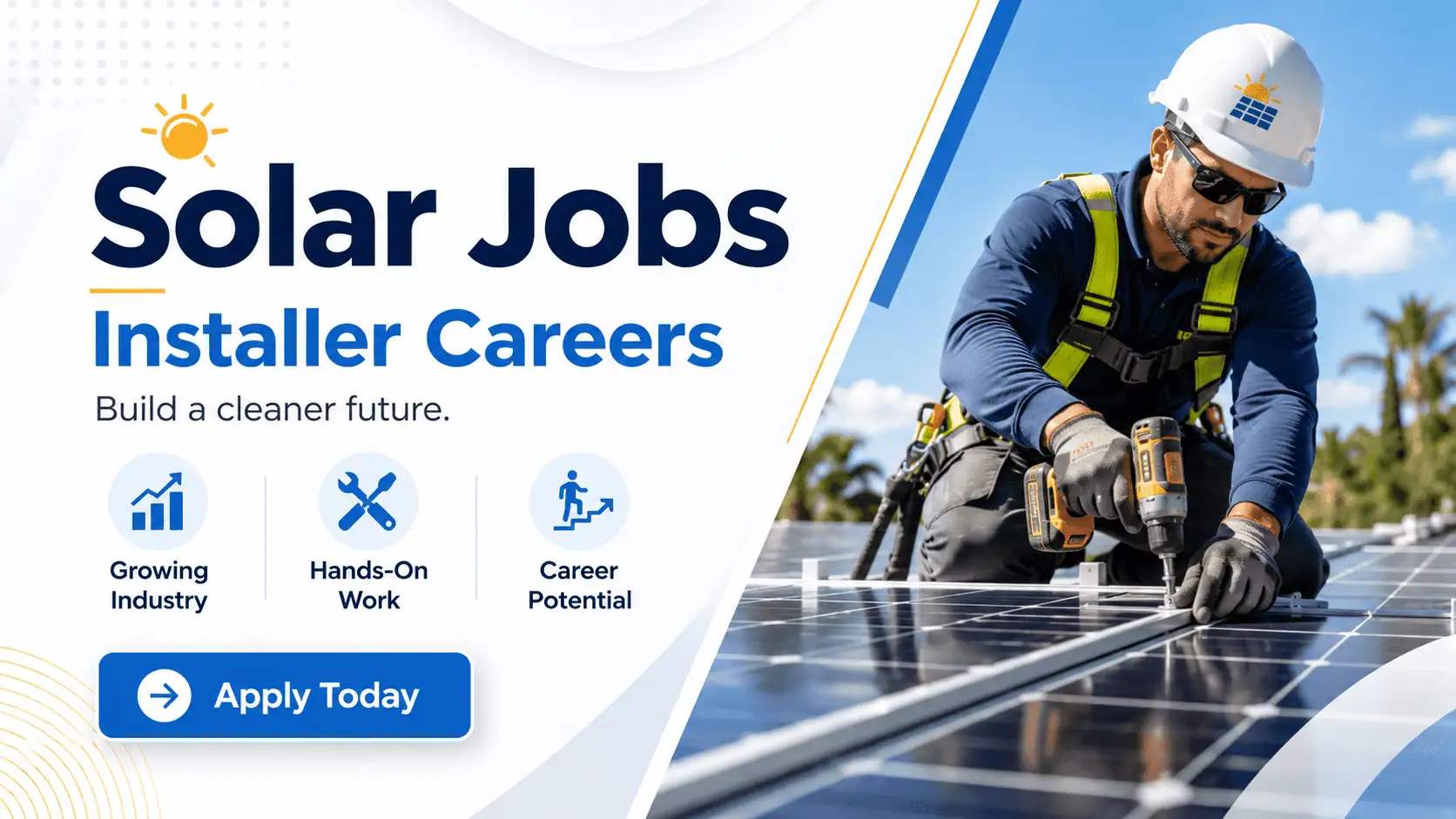
Solar photovoltaic installation has developed into one of the fastest-growing career areas in the United States. As more homes, businesses and public facilities install systems that convert sunlight into electricity, companies need workers who can transport equipment, prepare installation areas, mount panels and assist with system connections.
The occupation is commonly listed under titles such as Solar Photovoltaic Installer, Solar Installer, PV Installer, Solar Technician or Installation Crew Member. Although the titles may sound highly technical, not every entry-level opening requires years of previous solar experience. Some employers provide structured training to candidates who already demonstrate construction ability, electrical awareness, reliability or comfort working outdoors.
The U.S. Bureau of Labor Statistics projects employment of solar photovoltaic installers to grow approximately 42% from 2024 through 2034. About 4,100 openings are projected each year, on average, during that period. The occupation also had a national median annual wage of $51,860 in May 2024. These figures describe the occupation nationally and do not guarantee a particular wage or opening in every city.
What Solar Installation Work Actually Involves
A solar installation project begins long before the panels are producing electricity. Equipment must be delivered, the site must be evaluated and the planned layout must be reviewed. Installers may work on residential rooftops, commercial buildings or ground-mounted systems.
At the beginning of a project, crew members may help organize panels, rails, fasteners, wiring components and safety equipment. The installation team then prepares the mounting structure that will support the system. Panels must be positioned correctly and secured according to the approved design.
Solar photovoltaic installers assemble, set up and maintain systems that convert sunlight into energy. Their responsibilities can include measuring installation areas, installing support structures, placing panels and performing maintenance.
The electrical portion of the project may be completed or supervised by qualified electrical workers, depending on the employer, task and applicable law. An entry-level worker should never assume that being part of a solar crew authorizes them to complete electrical connections independently.
A Project From Arrival to Completion
Imagine a crew arriving at a residential property early in the morning. The work does not begin by immediately carrying panels onto the roof. The team first reviews the project plan, identifies access points and confirms the required safety procedures.
Equipment is unloaded and arranged so that materials do not block walkways or create hazards. The crew may inspect mounting components, ladders and protective equipment before beginning work.
Once the installation area is prepared, trained employees establish the mounting system. Measurements must be accurate because incorrect spacing can affect the panel layout. Panels are then moved carefully and secured to the structure.
After installation, authorized workers complete required system connections and tests. The team performs a final review, removes unused materials and leaves the property organized.
This process shows why solar installation requires more than physical strength. It combines planning, measurement, communication, tool use and strict attention to safety.
Do You Need Construction Experience?
Previous construction experience can improve an application, especially when it demonstrates that the candidate already understands jobsite behavior. Roofing, carpentry, electrical assistance, maintenance, warehouse operations and general labor may all provide transferable skills.
A person who has worked in roofing may already understand ladders, fall protection and outdoor conditions. A construction helper may know how to organize materials and follow measurements. A warehouse worker may have experience handling large products safely. Someone from manufacturing may understand quality checks and repeated procedures.
Candidates without direct construction experience can still emphasize dependability, comfort with tools, ability to follow instructions and willingness to complete training.
An employer is likely to prefer an honest candidate who needs instruction over someone who claims technical experience they do not possess.
Working at Heights
Many residential and commercial solar projects take place on roofs. This makes working at heights one of the most important considerations for applicants.
A worker may need to climb ladders, move carefully across approved work areas and use fall-protection equipment. Roof surfaces can become hot, slippery or difficult to navigate. Weather conditions may also change during the day.
Working at heights requires concentration. A worker should never remove required protective equipment to complete a task faster. They should also never use a ladder, harness or elevated platform without appropriate instruction.
Candidates who are uncomfortable with rooftop work may still find solar-related opportunities in warehouses, manufacturing facilities, project coordination, customer support or ground-mounted installation crews.
Weather and Physical Conditions
Solar installers commonly work outdoors. A normal workday can involve sunlight, heat, wind or colder temperatures, depending on the region and season.
Employees may carry materials, bend, reach, stand for long periods and repeat installation movements. They may also work around construction tools and electrical equipment.
Weather can delay or change a project schedule. High winds, rain or unsafe roof conditions may make installation inappropriate. Professional crews follow the employer’s safety decisions rather than attempting to continue under dangerous conditions.
This means candidates should be prepared for schedules that depend partly on project conditions.
Training and Education
The typical entry route varies. Some candidates begin after completing construction or technical courses. Others are hired into helper positions and learn through on-the-job training.
A high school diploma or equivalent may be requested by some employers, while others focus more heavily on practical ability. Technical programs may offer instruction in electrical fundamentals, photovoltaic systems, construction safety and system design.
Applicants should investigate any training program before paying tuition. Important questions include whether the program is recognized, whether practical training is included and whether graduates qualify for credentials requested by local employers.
A certificate should never be presented as a guarantee of employment.
What Employers May Look For
Solar installation companies often need employees who can arrive on time, follow technical instructions and work cooperatively. A crew cannot install equipment safely when one worker ignores procedures or fails to communicate.
Attention to detail is also important. Measurements, fasteners and equipment placement must match the project requirements. A minor mistake can require additional work or affect the installation.
Employers may also value a valid driver’s license because workers sometimes travel between project locations. However, this depends on the position and should be confirmed in the vacancy.
How to Describe Relevant Experience
An applicant does not need to use complicated technical language.
Instead of writing:
Helped with construction.
A clearer description would be:
Prepared work areas, organized materials and assisted trained employees while following site safety procedures.
Instead of:
Know how to use tools.
A stronger version would be:
Used authorized hand tools to complete measured assembly tasks and reported damaged equipment before use.
Candidates with warehouse experience might write:
Received, organized and moved large products using safe material-handling procedures.
Every statement should be accurate and based on real experience.
Compensation and Job Conditions
Solar installer pay varies by state, employer, experience, certification, project type and travel requirements. National occupational figures provide context, but the compensation shown in the active vacancy is the most relevant amount for an applicant.
A job offer should explain whether compensation is hourly, salaried or project-based. Candidates should also review whether travel time is paid, whether transportation is provided and whether overtime may be required.
Benefits may include healthcare coverage, retirement programs, paid time off, training or tool allowances. Eligibility varies by employer.
Some installation companies hire permanent workers, while others recruit for temporary projects. Applicants should verify whether the job is expected to continue after the current project ends.
Interview Questions You May Hear
A solar employer may ask how you respond to safety instructions, changing weather or unfamiliar equipment. They may also want to know whether you can travel between sites and work outdoors.
A strong answer to a safety question could be:
I would stop and ask for clarification before completing a task I had not been trained to perform. I would not guess when equipment, electrical systems or elevated work are involved.
Another question may focus on teamwork:
Describe a time you helped a group complete a physical or time-sensitive project.
The best response uses a real example and explains how you communicated, followed instructions and completed your responsibility.
How to Evaluate a Solar Job Offer
Read beyond the position title. Confirm the reporting location, project area, schedule and travel requirements. Ask whether the work is primarily rooftop or ground-based and which tools or protective equipment the company provides.
Also determine whether electrical credentials are required, whether paid training is included and whether the position is temporary or permanent.
A legitimate employer should explain the hiring process clearly. Be cautious when someone asks for a fee, promises guaranteed certification or requests payment for access to an ordinary vacancy.
Starting Your Search
Use job titles such as Solar Installer, Solar PV Installer, Installation Helper, Solar Technician and Solar Crew Member. Search within a commuting area you can realistically reach, but review travel requirements because the daily worksite may differ from the company office.
CareerOneStop offers a public job-search tool connected with the U.S. Department of Labor’s employment resources. It can be used to explore openings by occupation and location. Applicants should still verify each vacancy and employer before submitting sensitive information.
Solar installation can offer a path into renewable energy, construction and technical work. The strongest candidates are not simply enthusiastic about clean energy. They are prepared to learn, respect safety rules, work accurately and contribute reliably to a crew.